

OAC and Historical Ag Data – has the 150 year old mystery been solved?
Ah yes I’m on a roll with the historical data. Many of you have heard me ask “Where is the data?” If we have been conducting research or experiments for over 150 years here in Ontario – what do we have to show for it? As Data stewards – what happened? Where has that data gone? Yes I’ve talked about this in a variety of posts – the first one back in 2023:
As I prepare a few presentations for later this year, I’ve been asking myself this question: “If I don’t know the data ever existed – did it exist?” Similar to the saying: “If a tree falls in the forest and no one is around to hear it, does it make a sound?” I think we all know the “true” answer to that age old question – of course it makes a sound. To me – of course there was data to match experiments conducted 150+ years ago – it is just lost?
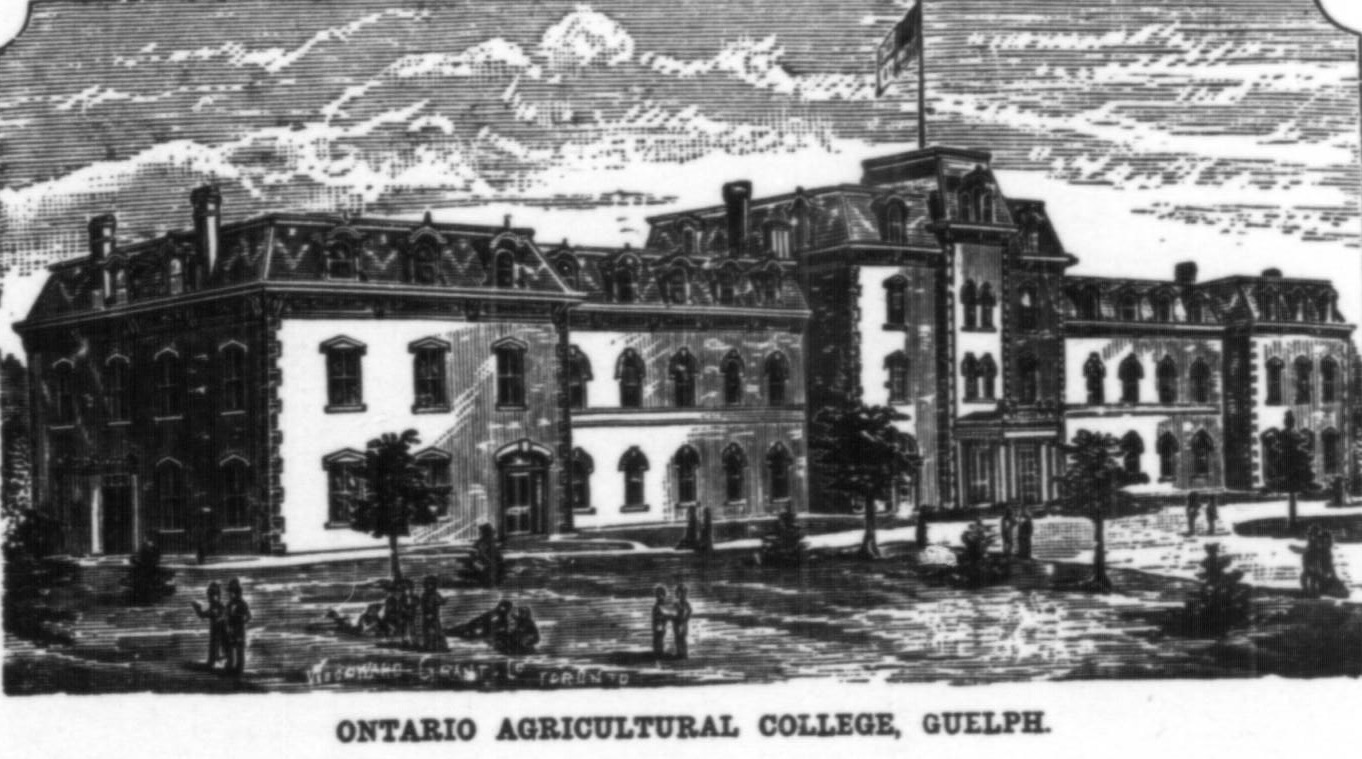
Can you sense that I found something 🙂 I’ve been reading the OAC Reviews and stumbled across a mention of the Annual Reports of the Ontario School of Agriculture and Experimental Farm. Yup!!! I found the very first report written by Wm. Johnston to the Commissioner of Agriculture on November 16, 1874 talking about the installation of the school – which is now known the Ontario Agricultural College. What a find!!! So – apart from the fascination of our history, including exams, list of students, finances, cropping reports, livestock inventories, etc… it was made clear from the first day that there would indeed be experiments on the farm:
“… in the first place, teach to the succeeding, if not the present generation, the most improved methods of cultivation—in one word, “ train young men in the science and art of improved husbandry ; ” and in the second, it must conduct experiments and publish the results.” The report talks about how this should happen – by having a “model farm” with the added capacity of conducting experiments. Now as you read through the reports, it is very clear that the authors are aware that this will take time – and they proposed it would take 5 years to have such a facility.
What I want to concentrate on is the Experiment section of these reports. They actually start in Volume 2 – that means there was an experiment, actually 2 livestock feeding trials were conducted in the winter and summer of 1876, and a plot experiment during the growing period of 1876. The data you ask?? Available in the reports!!! Here’s an example:
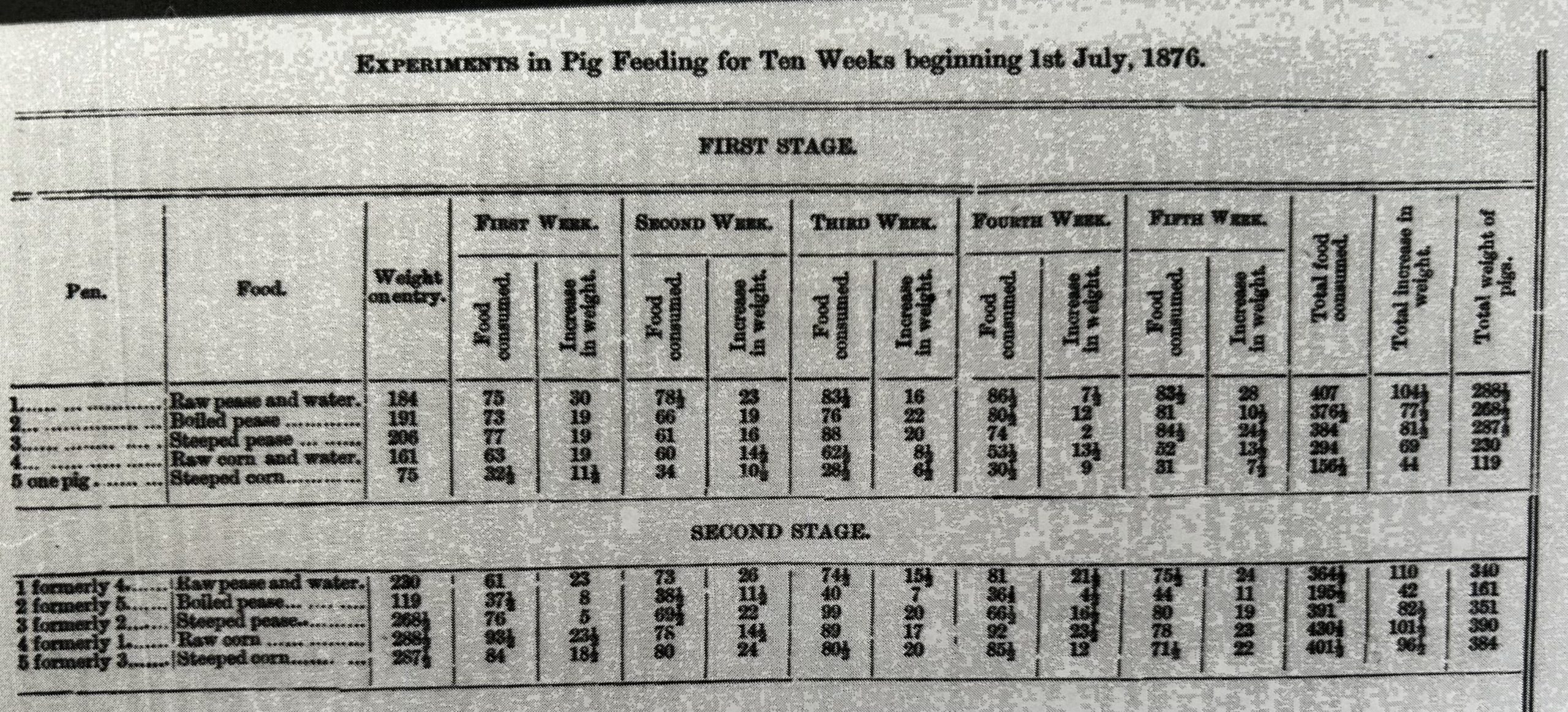
Source: Second Annual Report of the Ontario School of Agriculture and Experimental Farm. For the year ending 31st October 1876. Printed by the Order of the Legislative Assembly, Toronto: Printed by Hunter, Rose & Co., 25 Wellington Street West, 1875.
Now – apart from finding some of the OAC Historical data, what I really found interesting was the whole approach to research! I’ll leave you with one longer quote here and follow-up next time with some more thoughts and questions.
‘But, experiments are wanted now. There are A.B.C. duties owing the country and students in this response that must not be delayed – an initiatory work, having in view the testing of elementary principles, that should guide all sound, scientific, and practical farming in animal and plant life, with special reference to different modes of feeding, manuring and cultivation, or , as the Commissioners have put it, “to conduct experiments tending to the solution of questions of material interest to the agriculturists of the Province.”
While nothing definite has been laid before us, no suggestions, anything wanted by the farmers – something they would like to see done, it was thought desirable that simplicity should mark our first effort in this department, with growing experience as a guide, and practical utility our beacon – that is, will the experiment be useful to the general farmer, is it within the range of his daily work – can he lay his hands upon our results and follow them if desirable – will his land be enriched, his crops increased, and his stock give earlier and better returns? Another leading idea in feeding was, to use meantime only such materials as have been produced on the farm, or what are within the reach of any ordinary farmer.’
Wm. Johnston, President of the Ontario School of Agriculture and Experimental Farm
Wow!!! A few key phrases to highlight:
- conduct experiments and publish the results
- lay his hands upon our results and follow them if desirable
Let’s dig into these next time – maybe ask the question – why is Michelle pointing out these 2 phrases????